Smarter AI Systems with Fuzzy Logic Integration

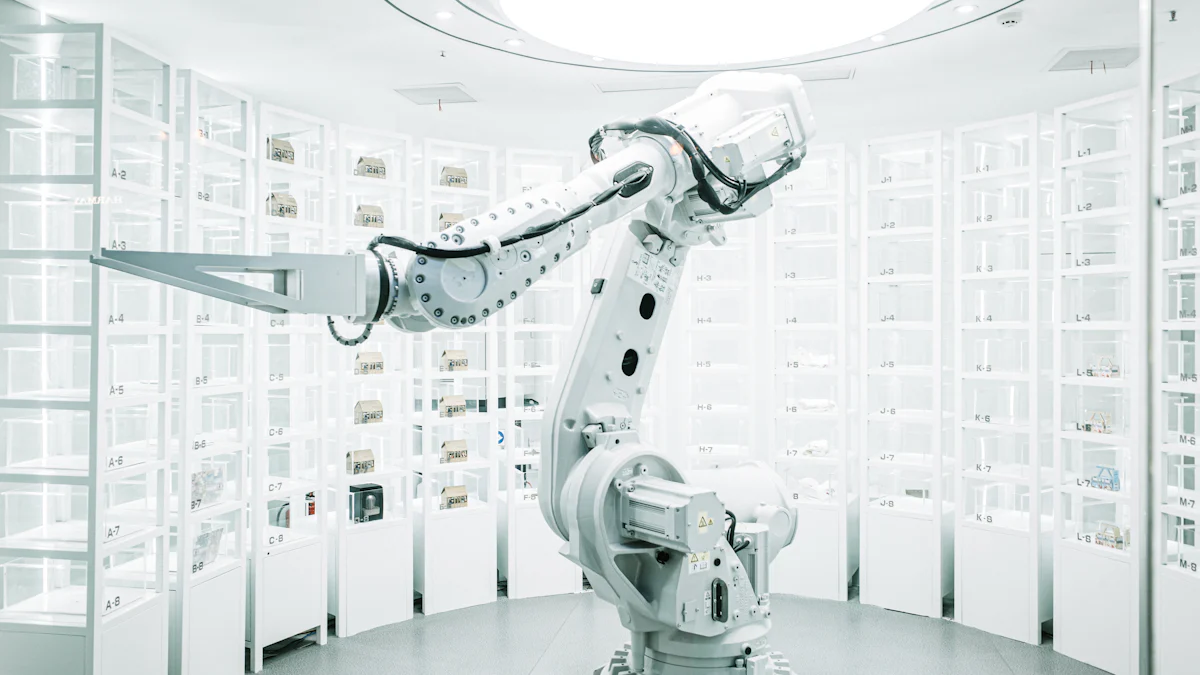
AI Fuzzy Logic transforms how intelligent systems handle uncertainty and imprecision. Unlike traditional binary logic, it enables machines to process vague or incomplete data, mimicking human reasoning. This approach excels in complex decision-making, where clear-cut answers are rare. By integrating fuzzy logic, AI systems gain flexibility and robustness, allowing them to adapt to real-world challenges. This innovation not only enhances decision accuracy but also bridges the gap between human thought processes and machine intelligence, creating smarter, more intuitive technologies.
Key Takeaways
AI Fuzzy Logic allows machines to process vague and incomplete data, enhancing decision-making in complex scenarios.
By mimicking human reasoning, fuzzy logic improves the adaptability of AI systems, making them more intuitive and effective in real-world applications.
Integrating fuzzy logic with neural networks and machine learning enhances the ability to handle uncertainty, leading to more accurate predictions and decisions.
Fuzzy logic's rule-based structure provides transparency and interpretability, addressing the 'black box' issue often associated with deep learning models.
Applications of fuzzy logic span various fields, including robotics, healthcare, and autonomous vehicles, showcasing its versatility and transformative potential.
Despite its advantages, challenges such as scalability and data quality must be addressed to fully leverage fuzzy logic in AI systems.
Future research opportunities include improving interpretability, integrating with emerging technologies, and developing standardized frameworks for broader adoption.
Understanding AI Fuzzy Logic

Definition and Core Principles
AI Fuzzy Logic represents a groundbreaking approach in artificial intelligence. Introduced by Lotfi Zadeh in the 1960s, it extends classical logic by incorporating the concept of partial truth. Unlike traditional binary logic, which operates on absolute values like "true" or "false," fuzzy logic allows for degrees of truth. This flexibility enables machines to process uncertain, vague, or incomplete information effectively.
The core principles of fuzzy logic revolve around three main ideas:
Fuzzification: This process converts crisp inputs into fuzzy sets. For example, instead of categorizing temperature as simply "hot" or "cold," fuzzy logic assigns degrees to these states, such as "slightly warm" or "very hot."
Inference Mechanism: Fuzzy logic uses a rule-based system to make decisions. These rules mimic human reasoning, such as "If the temperature is very hot, then turn on the air conditioner at maximum power."
Defuzzification: After processing, fuzzy logic translates the fuzzy outputs back into precise, actionable results. This step ensures that the system's decisions align with real-world requirements.
By adhering to these principles, AI Fuzzy Logic bridges the gap between human reasoning and machine intelligence. It empowers systems to handle ambiguity and make decisions that closely resemble human thought processes.
Key Features of Fuzzy Logic
Fuzzy logic stands out due to its unique features, which make it an essential tool in artificial intelligence:
Handling Uncertainty: Fuzzy logic excels in managing uncertainty and imprecision. It allows AI systems to interpret ambiguous data and make informed decisions, even when information is incomplete or unclear.
Human-Like Reasoning: The rule-based structure of fuzzy logic mimics human decision-making. This capability makes it ideal for applications requiring intuitive and adaptive responses.
Versatility Across Domains: Fuzzy logic finds applications in diverse fields, including robotics, autonomous vehicles, consumer electronics, and healthcare. For instance, it enhances medical diagnosis systems by analyzing complex patient data with varying degrees of certainty.
Integration with Other AI Technologies: Fuzzy logic seamlessly integrates with neural networks and machine learning. This combination creates hybrid models that leverage the strengths of both technologies, improving prediction accuracy and decision-making capabilities.
Simplicity and Efficiency: Despite its advanced capabilities, fuzzy logic remains simple to implement. Its computational efficiency makes it suitable for real-time applications, such as controlling industrial processes or optimizing energy consumption.
"Fuzzy logic extends classical logic to handle partial truth and is useful in dealing with uncertainty and vagueness in complex systems." - GeeksforGeeks
These features highlight the transformative potential of AI Fuzzy Logic. By enabling machines to process and reason with uncertain information, it paves the way for smarter, more adaptable AI systems.
Neural Networks and Machine Learning: An Overview
What are Neural Networks?
Neural networks represent a cornerstone of artificial intelligence. Inspired by the structure and functioning of the human brain, they consist of interconnected layers of nodes, often referred to as neurons. These nodes process and transmit information, enabling the network to learn patterns and relationships within data.
The evolution of neural networks has been remarkable. Early models, such as multilayer perceptron networks, laid the foundation for modern advancements. Today, Deep Neural Networks (DNNs) dominate the field, offering unparalleled capabilities in handling complex datasets. These networks excel in tasks like image recognition, natural language processing, and predictive analytics. evolution of neural networks
Neural networks operate through three primary layers:
Input Layer: This layer receives raw data, such as images, text, or numerical values.
Hidden Layers: These layers process the input data using mathematical operations. The number of hidden layers determines the network's depth, with deeper networks often yielding better performance.
Output Layer: This layer provides the final result, such as a classification label or a prediction.
In healthcare, neural networks have revolutionized medical imaging and diagnostics. For instance, deep neural networks assist in detecting fractures, identifying diseases like COVID-19, and improving mammography screening accuracy. Their ability to analyze vast amounts of data with precision makes them invaluable in critical applications. neural networks assist in
"Deep neural networks are widely used in healthcare sectors for medical imaging, diagnosis, drug development, prognosis, and risk assessment."
What is Machine Learning?
Machine learning serves as the broader framework within which neural networks operate. It refers to the process by which machines learn from data without explicit programming. By identifying patterns and relationships, machine learning models make predictions and decisions autonomously.
There are three main types of machine learning:
Supervised Learning: In this approach, models learn from labeled data. For example, a model trained on labeled images of cats and dogs can classify new images accurately.
Unsupervised Learning: Here, models work with unlabeled data to uncover hidden patterns. Clustering algorithms, for instance, group customers based on purchasing behavior.
Reinforcement Learning: This method involves learning through trial and error. Models receive rewards or penalties based on their actions, enabling them to optimize decision-making over time.
Machine learning has gained immense popularity due to its versatility. It powers applications ranging from recommendation systems on streaming platforms to fraud detection in financial transactions. Its integration with neural networks has further expanded its potential, enabling breakthroughs in fields like autonomous vehicles and personalized medicine.
The synergy between neural networks and machine learning drives innovation across industries. Together, they form the backbone of intelligent systems capable of solving real-world challenges with efficiency and accuracy.
The Case for Integrating AI Fuzzy Logic with Neural Networks and Machine Learning
Benefits of Integration
Integrating AI Fuzzy Logic with neural networks and machine learning offers numerous advantages. This combination enhances the ability of AI systems to process uncertain and imprecise data, which is often encountered in real-world scenarios. Traditional AI methods rely heavily on precise data, limiting their effectiveness in situations where ambiguity exists. Fuzzy logic addresses this limitation by introducing a framework that accommodates degrees of truth, enabling systems to make more nuanced decisions.
Improved Decision-Making: AI systems equipped with fuzzy logic can evaluate complex situations with incomplete or vague information. For example, in medical diagnosis, fuzzy logic helps analyze patient symptoms that may not fit neatly into predefined categories, leading to more accurate outcomes.
Enhanced Flexibility: Fuzzy logic allows AI systems to adapt to dynamic environments. In robotics, for instance, fuzzy logic enables machines to adjust their actions based on changing conditions, such as navigating uneven terrain or avoiding obstacles.
Human-Like Reasoning: By mimicking human thought processes, fuzzy logic bridges the gap between machine intelligence and human intuition. This capability proves invaluable in applications like natural language processing, where understanding context and ambiguity is crucial.
Seamless Integration: Fuzzy logic integrates effortlessly with neural networks and machine learning models. Hybrid systems, such as Adaptive Neuro-Fuzzy Inference Systems (ANFIS), combine the learning capabilities of neural networks with the reasoning power of fuzzy logic. These systems excel in tasks like time series forecasting and network attack detection.
"Fuzzy logic provides more flexibility and nuanced decision-making compared to traditional AI systems, handling imprecise data effectively."
The integration of AI Fuzzy Logic with other AI technologies creates smarter systems capable of tackling challenges that demand adaptability and precision.
Addressing Limitations of Neural Networks and Machine Learning
Neural networks and machine learning have revolutionized artificial intelligence, but they are not without limitations. These technologies often struggle with uncertainty, imprecision, and interpretability. Integrating AI Fuzzy Logic addresses these challenges effectively.
Handling Uncertainty: Neural networks require large amounts of labeled data for training, which may not always be available. Fuzzy logic compensates for this by allowing systems to work with approximate data. For example, in autonomous vehicles, fuzzy logic helps interpret sensor data that may be noisy or incomplete, ensuring safe navigation.
Improving Interpretability: Deep learning models, while powerful, often function as "black boxes," making it difficult to understand their decision-making processes. Fuzzy logic enhances interpretability by using rule-based systems that clearly outline how decisions are made. This transparency is particularly valuable in critical fields like healthcare and finance.
Reducing Overfitting: Machine learning models can overfit when trained on limited datasets, leading to poor generalization. Fuzzy logic mitigates this issue by incorporating human-like reasoning, which relies less on exact matches and more on approximate patterns.
Enhancing Robustness: Neural networks may fail when faced with outliers or unexpected inputs. Fuzzy logic strengthens these systems by providing a framework that accommodates variability. In industrial automation, for instance, fuzzy logic ensures consistent performance even when operating conditions deviate from the norm.
By addressing these limitations, the integration of AI Fuzzy Logic with neural networks and machine learning paves the way for more reliable and adaptable AI systems. This synergy not only improves performance but also expands the scope of applications across industries.
Techniques for Integrating AI Fuzzy Logic
Neuro-Fuzzy Systems
Neuro-fuzzy systems combine the adaptability of neural networks with the reasoning capabilities of fuzzy logic. This hybrid approach optimizes decision-making processes by leveraging the strengths of both technologies. Neural networks excel at learning patterns from data, while fuzzy logic provides a framework for handling uncertainty and imprecision. Together, they create systems capable of solving complex problems with greater accuracy and efficiency.
One prominent example of this integration is the Adaptive Neuro-Fuzzy Inference System (ANFIS). ANFIS uses neural networks to fine-tune fuzzy rules and membership functions, enhancing the system's ability to model nonlinear relationships. This method has proven effective in applications such as time series forecasting, where traditional models struggle to account for variability and ambiguity.
The design of neuro-fuzzy systems typically involves three steps:
Initialization: Define fuzzy rules and membership functions based on domain knowledge.
Training: Use neural networks to adjust parameters and improve the system's performance.
Inference: Apply the optimized fuzzy rules to make decisions or predictions.
In real-world scenarios, neuro-fuzzy systems have demonstrated their value across various industries. For instance, in industrial automation, these systems optimize processes by adapting to changing conditions. In financial analysis, they enhance forecasting accuracy by incorporating uncertain market data. By integrating AI Fuzzy Logic with neural networks, neuro-fuzzy systems offer a robust solution for tackling challenges that require both precision and flexibility.
"A method for optimization of fuzzy rule-based systems using neural networks is described." - Research on Neuro-Fuzzy Systems
Fuzzy Rule-Based Models in Machine Learning
Fuzzy rule-based models bring transparency and interpretability to machine learning. These models use a set of "if-then" rules to represent knowledge, making the decision-making process easy to understand. Unlike traditional machine learning algorithms, which often function as black boxes, fuzzy rule-based models provide clear insights into how decisions are made.
The integration of fuzzy logic into machine learning frameworks enhances their ability to handle ambiguous and incomplete data. For example, in healthcare, fuzzy rule-based models analyze patient symptoms that may not fit neatly into predefined categories. This approach improves diagnostic accuracy and supports personalized treatment plans.
Key features of fuzzy rule-based models include:
Transparency: The rule-based structure makes it easy to trace and explain decisions.
Flexibility: These models adapt to new data without requiring extensive retraining.
Robustness: They perform well in noisy or uncertain environments.
Machine learning techniques, such as clustering and classification, benefit significantly from fuzzy logic. Clustering algorithms, for instance, use fuzzy sets to group data points based on degrees of membership rather than rigid boundaries. This flexibility allows for more nuanced analysis and better results.
In addition to standalone applications, fuzzy rule-based models integrate seamlessly with other AI technologies. Hybrid approaches, which combine fuzzy logic with machine learning, enhance system robustness and expand their applicability. For example, in autonomous vehicles, these models interpret sensor data to make real-time decisions, ensuring safe navigation even in unpredictable conditions.
"Fuzzy logic models provide transparent and interpretable rules for decision-making." - Explainable AI Research
By incorporating AI Fuzzy Logic into machine learning, fuzzy rule-based models address the limitations of traditional algorithms. They offer a powerful tool for creating intelligent systems that are not only accurate but also understandable and adaptable.
Real-World Applications of AI Fuzzy Logic

Robotics and Autonomous Systems
AI Fuzzy Logic plays a pivotal role in robotics and autonomous systems by enabling machines to adapt to dynamic environments. Robots often operate in unpredictable conditions, where precise data may not always be available. Fuzzy logic equips these systems with the ability to process ambiguous information and make decisions that mimic human reasoning. For instance, fuzzy logic controllers allow robots to adjust their movements based on terrain changes, ensuring stability and efficiency.
In industrial settings, robots use fuzzy logic to optimize tasks such as welding, assembly, and material handling. These systems analyze variables like pressure, speed, and temperature to maintain precision. Additionally, fuzzy logic enhances the performance of service robots, enabling them to interact with humans more intuitively. By interpreting vague commands or gestures, these robots provide personalized assistance in healthcare, hospitality, and customer service industries.
The integration of fuzzy logic into robotics extends to IoT systems as well. Smart devices equipped with fuzzy logic can process large volumes of data from sensors, enabling seamless communication and coordination. This capability proves invaluable in applications like smart factories, where interconnected machines work collaboratively to improve productivity and reduce downtime.
"Fuzzy logic controllers enable adaptive behavior in robotics, making them suitable for complex and uncertain environments."
Autonomous Vehicles
Autonomous vehicles rely heavily on AI Fuzzy Logic to navigate safely and efficiently. These vehicles must interpret data from multiple sensors, including cameras, radar, and lidar, to make real-time decisions. Fuzzy logic provides a framework for handling the uncertainty and imprecision inherent in this data, ensuring accurate and reliable performance.
For example, fuzzy logic helps autonomous vehicles determine appropriate speeds based on traffic conditions, weather, and road quality. It also enables smooth lane changes and obstacle avoidance by evaluating factors like distance, velocity, and driver intent. This human-like reasoning enhances the safety and comfort of passengers.
In addition to navigation, fuzzy logic supports energy efficiency in electric vehicles. By optimizing battery usage and power distribution, it extends the range and lifespan of these vehicles. Furthermore, fuzzy logic contributes to predictive maintenance by analyzing sensor data to identify potential issues before they escalate.
The application of fuzzy logic in autonomous vehicles demonstrates its transformative potential. By addressing challenges like uncertainty and variability, it paves the way for safer and more efficient transportation systems.
Medical Diagnosis and Healthcare
AI Fuzzy Logic revolutionizes medical diagnosis and healthcare by improving decision-making processes. Traditional diagnostic methods often struggle with ambiguous symptoms and incomplete patient data. Fuzzy logic addresses these challenges by allowing systems to evaluate degrees of certainty and provide more accurate assessments.
In disease diagnosis, fuzzy logic models analyze complex datasets, including symptoms, test results, and medical history. For instance, these systems assist in identifying conditions like diabetes, cardiovascular diseases, and cancer by interpreting subtle patterns that may go unnoticed by conventional methods. This approach enhances early detection and treatment planning, ultimately improving patient outcomes.
Fuzzy logic also plays a crucial role in personalized medicine. By considering individual variations in genetics, lifestyle, and environment, it tailors treatment plans to meet specific patient needs. In addition, fuzzy logic optimizes resource allocation in hospitals by predicting patient demand and managing staff schedules effectively.
The integration of fuzzy logic extends to wearable health devices as well. These devices monitor vital signs and provide real-time feedback, enabling users to manage chronic conditions proactively. For example, a smartwatch equipped with fuzzy logic can analyze heart rate variability and alert users to potential health risks.
"Fuzzy logic systems enhance medical diagnosis by analyzing uncertain and imprecise data, leading to better healthcare outcomes."
Challenges and Future Directions in AI Fuzzy Logic Integration
Challenges in Integration
Integrating AI Fuzzy Logic into existing systems presents several challenges that require careful consideration. One of the primary obstacles lies in the complexity of designing and implementing fuzzy rule-based systems. Crafting these rules demands expert knowledge and a deep understanding of the domain. Without this expertise, the system may fail to deliver accurate or meaningful results.
Another significant challenge involves scalability. As systems grow in size and complexity, managing fuzzy rules and membership functions becomes increasingly difficult. This issue often leads to higher computational costs, which can hinder real-time applications like autonomous vehicles or robotics. Developers must strike a balance between system performance and computational efficiency to ensure practical usability.
Interoperability with other AI technologies also poses a challenge. While AI Fuzzy Logic integrates well with neural networks and machine learning, achieving seamless communication between these components requires advanced algorithms and frameworks. For instance, hybrid models like Adaptive Neuro-Fuzzy Inference Systems (ANFIS) demand precise tuning to optimize their performance.
Data quality further complicates integration efforts. Fuzzy logic thrives on handling uncertainty, but it still relies on accurate and relevant input data. Inconsistent or noisy data can compromise the system's decision-making capabilities. Industries like healthcare and autonomous systems must address this issue by implementing robust data preprocessing techniques.
Lastly, the lack of standardization in fuzzy logic methodologies creates barriers to widespread adoption. Developers often rely on custom solutions tailored to specific applications, which limits the transferability of these systems across different domains. Establishing universal standards could accelerate the development and deployment of AI Fuzzy Logic technologies.
"Fuzzy logic offers flexibility and nuanced decision-making, but its integration into complex systems requires overcoming challenges like scalability and data quality."
Future Research Opportunities
The future of AI Fuzzy Logic holds immense potential for innovation and growth. Researchers continue to explore ways to enhance its capabilities and expand its applications across various industries. One promising avenue involves improving the interpretability of hybrid models. By combining fuzzy logic with explainable AI techniques, developers can create systems that not only make accurate decisions but also provide clear insights into their reasoning processes.
Advancements in computational power open new possibilities for scaling fuzzy logic systems. High-performance computing and cloud-based platforms enable the efficient processing of large datasets, making it feasible to deploy fuzzy logic in real-time applications. For example, autonomous vehicles can benefit from faster decision-making algorithms powered by cloud infrastructure.
Another exciting area of research focuses on integrating fuzzy logic with emerging technologies like quantum computing and graph neural networks. These combinations could unlock unprecedented levels of accuracy and efficiency in fields such as medical diagnosis, financial forecasting, and industrial automation. For instance, quantum-enhanced fuzzy logic systems might revolutionize drug discovery by analyzing complex molecular interactions with greater precision.
The development of standardized frameworks and tools represents another critical research opportunity. Creating open-source libraries and platforms for AI Fuzzy Logic would democratize access to this technology, enabling more organizations to adopt and customize it for their needs. Such initiatives could drive innovation in sectors like consumer electronics, aerospace, and smart cities.
Finally, fostering collaboration between academia, industry, and government agencies can accelerate progress in AI Fuzzy Logic. Joint research initiatives and funding programs can address existing challenges while exploring new frontiers. By leveraging collective expertise, stakeholders can unlock the full potential of fuzzy logic to create smarter, more adaptable AI systems.
"Understanding the fundamentals of fuzzy logic opens up new avenues for creating intelligent systems that mimic human-like decision-making processes."
AI Fuzzy Logic enhances neural networks and machine learning by addressing their limitations and enabling smarter, more adaptable systems. This integration empowers AI to handle uncertainty, model human reasoning, and make decisions in dynamic environments. Fields like robotics, healthcare, and autonomous vehicles benefit significantly from this synergy, as it allows for better flexibility and nuanced decision-making. While challenges such as scalability and data quality remain, ongoing research and innovation continue to unlock new possibilities. By embracing this powerful combination, industries can create intelligent systems capable of solving real-world problems with greater effectiveness.
See Also
Leading Figures in the Worldwide Smart Control Sector
Huizhou Jiayao Tech: A Hub in Zhongkai High-Tech Zone
Launch of Huizhou Zhongkai's Innovative Electronic Cloud Platform

Zhongkai High tech Zone National foreign trade transformation and Upgradi Base(Electronic Information)Cloud Platform.
Address: Zhongkai High-tech Zone,Huizhou City ,Guangdong,China
E-mail: huizhoueii@163.com 13510001271@163.com
Tel: +86-0752-3279220 Mobile: +86-13510001271
