Best Companies Driving AI-Powered Metaverse Experiences


Artificial intelligence (AI) is revolutionizing the AI metaverse, transforming it into a dynamic and immersive digital realm. By enhancing automation and decision-making, AI enables virtual environments to become more responsive and personalized. Predictions indicate that by 2026, 25% of people will spend at least one hour daily in the AI metaverse, driving organizations to adapt their services for this evolving space. Companies leveraging AI are not only shaping user experiences but also redefining how individuals interact, collaborate, and create within these virtual worlds. This synergy between AI and the metaverse is unlocking unprecedented opportunities for innovation.
Key Takeaways
AI is transforming the metaverse into a more immersive and personalized experience, with predictions indicating that 25% of people will spend at least one hour daily in this digital realm by 2026.
Meta is leading the way by integrating AI to create realistic avatars and virtual assistants, enhancing user engagement and fostering authentic social interactions.
Microsoft's AI-powered tools, like Microsoft Mesh, are revolutionizing collaboration in virtual workspaces, allowing teams to connect and work together seamlessly from anywhere.
NVIDIA's Omniverse platform enables the creation of hyper-realistic graphics and simulations, empowering industries to develop digital twins for testing and innovation.
Roblox democratizes game development with AI tools that simplify the creation process, allowing users of all skill levels to contribute to the metaverse.
Tencent focuses on enhancing social interactions and safety in the metaverse through AI-driven content moderation and personalized user experiences.
Epic Games is setting new standards for user engagement by integrating AI into its gaming experiences, creating dynamic environments that respond to user actions.
Meta: Pioneering AI in the Metaverse
Meta’s Vision for the AI Metaverse
Meta envisions a future where the AI Metaverse becomes a seamless blend of virtual and real-world experiences. By integrating AI into its platforms, Meta focuses on creating immersive virtual environments that adapt to user preferences. Through advanced AI algorithms, these environments respond dynamically, offering personalized interactions that enhance user engagement.
Meta also prioritizes the development of realistic avatars and virtual assistants. These AI-driven avatars mimic human expressions and behaviors, fostering authentic social interactions. Virtual assistants powered by AI simplify navigation within the metaverse, providing users with intuitive support and guidance. This vision underscores Meta's commitment to redefining connectivity in the digital age.
Key AI Innovations by Meta
Meta has introduced groundbreaking AI innovations that elevate the AI Metaverse experience. One of its key advancements lies in natural language processing (NLP). This technology enables seamless communication between users and virtual entities, breaking down language barriers and fostering global collaboration. NLP ensures that conversations within the metaverse feel natural and intuitive.
Another significant innovation involves AI tools designed for accessibility and inclusivity. Meta leverages AI to create features that cater to diverse audiences, including individuals with disabilities. These tools enhance usability, ensuring that everyone can participate in the metaverse without limitations. By prioritizing inclusivity, Meta sets a standard for equitable access in virtual spaces.
Impact on the AI Metaverse
Meta's contributions have profoundly impacted the AI Metaverse, particularly in enhancing social interactions and user engagement. AI-powered avatars and environments encourage meaningful connections, making virtual interactions more engaging and lifelike. This fosters a sense of community, even in digital spaces.
Additionally, Meta's focus on accessibility expands the reach of the metaverse to diverse audiences. By removing barriers to entry, Meta ensures that individuals from all walks of life can explore and benefit from the metaverse. This inclusive approach not only broadens the user base but also enriches the collective experience within virtual environments.
Microsoft: Revolutionizing Collaboration in the AI Metaverse
Microsoft’s Metaverse Strategy
Microsoft has positioned itself as a leader in transforming collaboration within the AI Metaverse. The company focuses on creating virtual workspaces that enhance productivity and interaction. Through AI-powered enterprise solutions, Microsoft enables businesses to collaborate seamlessly in virtual environments. These solutions integrate advanced AI technologies to facilitate efficient communication, task management, and project execution.
The introduction of Microsoft Mesh exemplifies this strategy. This platform allows users to hold virtual meetings, interact with 3D objects, and share content in real-time. By embedding AI into Microsoft Mesh and other platforms, the company ensures that users experience immersive and interactive virtual spaces. This integration bridges the gap between physical and digital workspaces, redefining how teams connect and collaborate.
AI Innovations in Microsoft’s Offerings
Microsoft has developed several AI-driven tools that elevate its metaverse offerings. One of the most notable innovations is its real-time translation and communication tools. These tools break down language barriers, enabling global teams to communicate effortlessly. AI algorithms process and translate conversations instantly, ensuring smooth interactions across diverse linguistic groups.
Another key innovation lies in machine learning for realistic virtual environments. Microsoft employs machine learning models to create lifelike simulations and environments within the metaverse. These models analyze user behavior and preferences, adapting virtual spaces to meet specific needs. This approach enhances the realism and functionality of virtual workspaces, making them more engaging and effective.
Impact on the AI Metaverse
Microsoft’s contributions have significantly impacted the AI Metaverse, particularly in the realm of remote work and virtual meetings. AI-powered platforms like Microsoft Mesh transform traditional workspaces into dynamic virtual environments. Teams can collaborate from anywhere, fostering productivity and innovation without geographical constraints.
The company’s focus on cross-platform compatibility further enhances its impact. By enabling seamless collaboration across devices and platforms, Microsoft ensures that users can access the metaverse effortlessly. This approach promotes inclusivity and accessibility, allowing individuals and organizations to leverage the metaverse for various purposes. Microsoft’s innovations continue to shape the future of work, setting new standards for collaboration in the digital age.
NVIDIA: Driving AI-Powered Graphics and Simulations

NVIDIA’s Role in the AI Metaverse
Omniverse platform as a foundation for virtual worlds
NVIDIA has established itself as a cornerstone in the AI Metaverse through its groundbreaking Omniverse platform. This platform serves as a robust foundation for building and creating virtual worlds, enabling developers to design highly detailed and interactive 3D simulations. By integrating tools like Blender and Adobe, NVIDIA ensures that artists and creators can seamlessly access the platform to bring their visions to life.
The Omniverse platform has undergone significant enhancements, accelerating the development of virtual environments. These upgrades empower enterprises to construct larger and more intricate simulations, such as digital twins. Industrial companies leverage these digital twins to replicate real-world systems, providing a precise and scalable solution for testing and innovation within the metaverse.
AI-driven graphics and simulation technologies
NVIDIA’s expertise in graphics processing and AI has revolutionized the creation of virtual environments. The company employs advanced AI-driven technologies to produce hyper-realistic graphics and simulations. Its RTX platform, for instance, introduces cutting-edge rendering capabilities that redefine how users interact with virtual worlds. These technologies enable developers to craft immersive experiences with unparalleled visual fidelity, setting a new standard for realism in the metaverse.
Additionally, NVIDIA’s adoption of Universal Scene Description (OpenUSD) expands the scope of its AI-driven tools. This framework allows developers to create accurate and scalable virtual worlds for applications in robotics, industrial design, and engineering. By combining AI with OpenUSD, NVIDIA facilitates the rapid development of complex simulations, pushing the boundaries of what is possible in the metaverse.
Key AI Contributions by NVIDIA
Digital twins for realistic simulations
NVIDIA’s advancements in digital twin technology have transformed the way industries approach simulation and modeling. Digital twins, powered by the Omniverse platform, replicate real-world objects and systems with remarkable accuracy. These virtual counterparts enable businesses to test scenarios, optimize processes, and predict outcomes without physical constraints. Industries such as manufacturing, healthcare, and urban planning benefit from these simulations, which provide valuable insights and reduce operational risks.
Advanced rendering and real-time physics engines
NVIDIA’s rendering technologies and real-time physics engines play a pivotal role in enhancing the realism of virtual environments. The company’s RTX platform incorporates ray tracing and AI-based rendering techniques to deliver lifelike visuals. Real-time physics engines simulate natural movements and interactions, ensuring that virtual objects behave as they would in the physical world. These innovations create immersive experiences that captivate users and elevate the quality of content within the metaverse.
Impact on the AI Metaverse
Hyper-realistic and interactive environments
NVIDIA’s contributions have significantly advanced the development of hyper-realistic and interactive environments in the AI Metaverse. The integration of AI-driven graphics and simulation technologies enables developers to create virtual spaces that mirror the real world in detail and functionality. These environments enhance user engagement by offering immersive experiences that feel authentic and dynamic.
Empowering creators with AI tools for content development
NVIDIA empowers creators by providing them with sophisticated AI tools for content development. The Omniverse platform simplifies the process of designing and building virtual worlds, allowing artists and developers to focus on creativity rather than technical challenges. By streamlining workflows and offering advanced features, NVIDIA supports a diverse range of creators, from independent developers to large enterprises. This democratization of content creation fosters innovation and drives the growth of the metaverse.
Roblox: Empowering User-Generated Content in the AI Metaverse
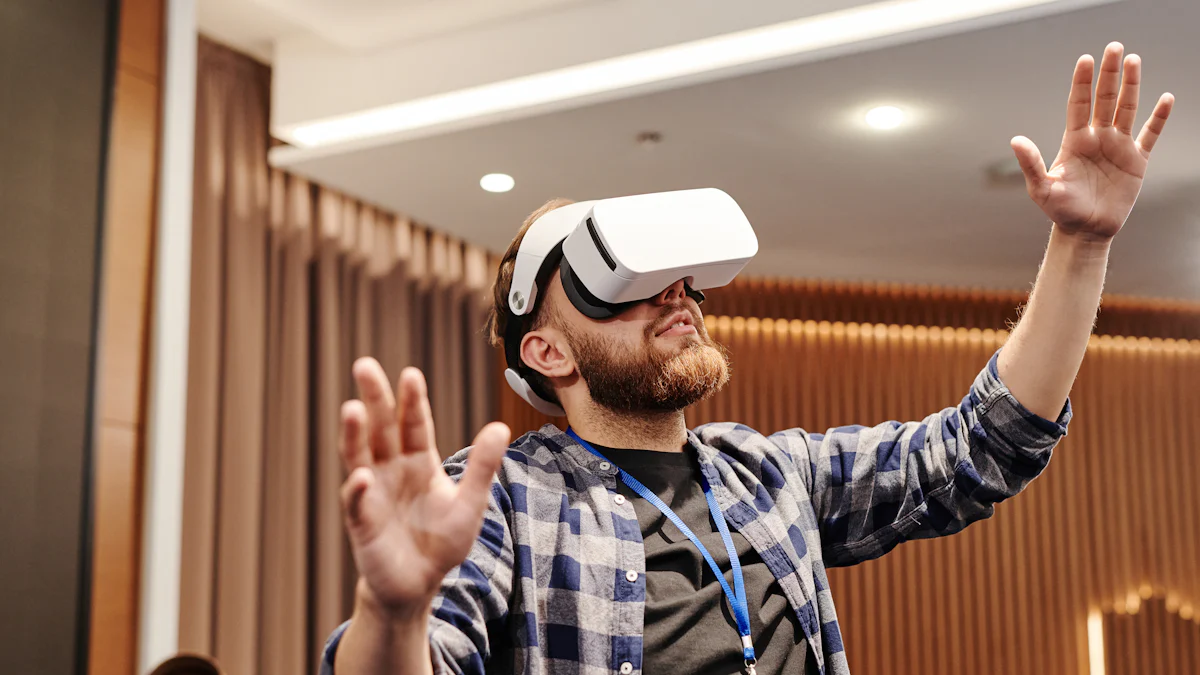
Roblox’s Metaverse Ecosystem
Democratizing metaverse creation with AI tools
Roblox has revolutionized the way users create and interact within the metaverse by introducing AI-powered tools that simplify game development. These tools, such as Code Assist and Material Generator, allow creators to generate code and design textures effortlessly. By leveraging conversational AI, users can input simple text prompts to produce complex scripts or realistic object materials. This approach eliminates technical barriers, enabling individuals without programming expertise to participate in the creation process.
The platform's commitment to democratizing content creation extends to its vision for the future. CEO David Baszucki envisions a metaverse where users can design avatars, clothing, and other virtual assets in real-time using natural language descriptions. This innovation empowers a broader audience to contribute to the metaverse, fostering a more inclusive and diverse ecosystem.
Personalization algorithms for tailored experiences
Roblox employs advanced personalization algorithms to enhance user experiences within the metaverse. These algorithms analyze user preferences and behaviors to deliver tailored recommendations, ensuring that each individual encounters content aligned with their interests. Whether it involves suggesting games, virtual items, or social interactions, these AI-driven systems create a more engaging and customized environment.
By prioritizing personalization, Roblox strengthens user retention and satisfaction. The platform adapts dynamically to the needs of its community, making the metaverse a space where users feel valued and understood. This focus on individualized experiences underscores Roblox's dedication to creating meaningful connections within its virtual world.
AI Innovations in Roblox
AI tools for game creation and world-building
Roblox has introduced groundbreaking AI tools that redefine game creation and world-building. Code Assist generates functional scripts based on conversational inputs, streamlining the development process for creators. Similarly, the Material Generator transforms text descriptions into detailed object textures, reducing the time and effort required for design tasks. These tools, currently in beta, represent a significant leap forward in accessibility and efficiency.
These innovations empower creators to focus on creativity rather than technical challenges. By automating complex processes, Roblox enables users to bring their ideas to life with minimal friction. This approach not only accelerates development but also encourages experimentation and innovation within the metaverse.
Enhancing creativity and innovation for users
Roblox fosters creativity by providing users with intuitive tools and resources. The platform's AI-driven features inspire creators to push boundaries and explore new possibilities. For instance, users can design intricate virtual worlds or develop interactive gameplay mechanics without requiring extensive technical knowledge. This accessibility encourages individuals of all ages to participate in the creative process.
The emphasis on innovation extends to the platform's collaborative nature. Roblox allows users to share their creations with a global audience, sparking inspiration and collaboration among its community. This ecosystem of shared creativity drives the continuous evolution of the metaverse, ensuring that it remains vibrant and dynamic.
Impact on the AI Metaverse
Fostering community-driven virtual experiences
Roblox has established itself as a hub for community-driven virtual experiences. Its AI-powered tools enable users to create and share content that reflects their unique perspectives and interests. This collaborative approach fosters a sense of ownership and belonging within the metaverse, transforming it into a space shaped by its users.
The platform's focus on community engagement enhances the overall quality of experiences within the metaverse. By empowering individuals to contribute, Roblox ensures that its virtual world remains diverse and inclusive. This user-centric model sets a benchmark for other platforms seeking to build thriving metaverse ecosystems.
Enabling creativity for users of all ages
Roblox's accessible tools and features make it a platform where users of all ages can unleash their creativity. Children, teenagers, and adults alike can participate in the creation process, designing games, avatars, and environments that reflect their imaginations. This inclusivity broadens the appeal of the metaverse, attracting a wide range of participants.
By removing barriers to entry, Roblox encourages lifelong learning and exploration. Users gain valuable skills in design, coding, and collaboration while enjoying the creative process. This focus on empowerment ensures that the metaverse remains a space for growth and discovery, enriching the lives of its users.
Tencent: Expanding Gaming and Social Platforms in the AI Metaverse
Tencent’s Metaverse Ambitions
Leveraging AI for immersive gaming experiences
Tencent has emerged as a dominant force in the AI Metaverse, leveraging its expertise in gaming and technology to create immersive experiences. The company integrates advanced AI technologies into its gaming platforms to enhance realism and interactivity. By employing machine learning algorithms, Tencent ensures that virtual environments adapt dynamically to player actions, creating a more engaging and lifelike experience.
Tencent’s gaming portfolio includes some of the most popular titles globally, which serve as a foundation for its metaverse initiatives. These games incorporate AI-driven features such as intelligent NPCs (non-playable characters) and adaptive gameplay mechanics. This approach not only elevates user engagement but also sets a benchmark for innovation in the gaming sector.
Investments in metaverse-related technologies
Tencent has made substantial investments in metaverse-related technologies to solidify its position as a leader in this evolving space. The company has entered strategic partnerships, such as its collaboration with Morpheus Labs, to drive Web3 gaming and metaverse innovation. These efforts aim to accelerate the development of decentralized platforms and expand the capabilities of the metaverse ecosystem.
Additionally, Tencent invests heavily in computing power and AI chips to enhance the performance of its virtual environments. These investments enable the creation of highly interactive and visually stunning experiences, attracting a broader audience to the metaverse. Tencent’s commitment to technological advancement underscores its ambition to shape the future of digital interaction.
AI-Powered Innovations by Tencent
AI for virtual social interactions and content moderation
Tencent utilizes AI to revolutionize virtual social interactions within the metaverse. Its platforms incorporate AI-driven features that facilitate seamless communication and collaboration among users. For instance, AI algorithms analyze user behavior to recommend personalized social experiences, fostering meaningful connections in virtual communities.
Content moderation is another area where Tencent excels. The company employs AI to monitor and regulate user-generated content, ensuring a safe and respectful environment. These systems detect and filter inappropriate behavior or language in real-time, maintaining the integrity of its platforms. By prioritizing safety and inclusivity, Tencent creates a welcoming space for all users.
Machine learning for safety and inclusivity
Machine learning plays a pivotal role in Tencent’s efforts to enhance safety and inclusivity within the metaverse. The company develops algorithms that identify potential risks and implement preventive measures to protect users. These systems address issues such as cyberbullying and harassment, promoting a positive and secure experience.
Tencent also focuses on inclusivity by designing features that cater to diverse user needs. AI-powered tools provide accessibility options for individuals with disabilities, ensuring equal participation in virtual activities. This commitment to inclusivity reflects Tencent’s vision of a metaverse that embraces diversity and fosters community growth.
Impact on the AI Metaverse
Enhancing engagement in gaming and virtual communities
Tencent’s innovations have significantly enhanced engagement in gaming and virtual communities. By integrating AI into its platforms, the company creates dynamic and interactive experiences that captivate users. These advancements encourage players to spend more time in the metaverse, contributing to the growth of its digital ecosystem.
The company’s focus on community-driven experiences further strengthens its impact. Tencent empowers users to connect and collaborate, building vibrant virtual communities. This approach not only enriches the user experience but also establishes Tencent as a leader in fostering social interaction within the metaverse.
Ensuring a safe and inclusive environment
Tencent’s dedication to safety and inclusivity has set a standard for the AI Metaverse. Its AI-driven content moderation systems and accessibility features ensure that all users feel secure and valued. By addressing challenges such as online harassment and accessibility barriers, Tencent creates a metaverse that welcomes individuals from all backgrounds.
This emphasis on inclusivity enhances the overall quality of the metaverse experience. Users can explore and interact without fear of discrimination or exclusion, making the metaverse a space for creativity and collaboration. Tencent’s efforts demonstrate its commitment to building a digital world that reflects the values of fairness and respect.
Epic Games: Innovating User Engagement in the AI Metaverse
Epic Games’ Metaverse Vision
AI integration to improve user interaction
Epic Games has positioned itself as a trailblazer in enhancing user interaction within the AI Metaverse. By integrating advanced AI technologies, the company has redefined how users engage with virtual environments. AI systems analyze user behavior and preferences, enabling personalized interactions that feel intuitive and immersive. These technologies adapt dynamically, ensuring that every user experiences a tailored journey within the metaverse.
The company’s flagship product, Unreal Engine 5, exemplifies this vision. It leverages AI to create lifelike scenarios, allowing users to interact with virtual worlds in unprecedented ways. From realistic character movements to responsive environments, Epic Games ensures that every element contributes to a cohesive and engaging experience. This focus on AI-driven interaction sets a new benchmark for user engagement in the metaverse.
Focus on immersive gaming and virtual experiences
Epic Games has consistently prioritized the development of immersive gaming and virtual experiences. The company invests heavily in projects like Fortnite, which serves as a cornerstone of its metaverse strategy. By incorporating AI tools, Epic Games enhances gameplay mechanics, making them more dynamic and interactive. These innovations transform traditional gaming into a fully immersive experience, where users feel deeply connected to the virtual world.
The integration of mixed reality (MR) and virtual reality (VR) devices further amplifies this immersion. Products like VR headsets and smart glasses enable users to explore virtual scenarios with heightened realism. Epic Games combines these technologies with AI to create environments that blur the line between the physical and digital realms. This commitment to immersion ensures that users remain engaged and invested in their virtual experiences.
Key AI Contributions by Epic Games
AI tools for creating dynamic virtual worlds
Epic Games empowers creators with cutting-edge AI tools designed for building dynamic virtual worlds. Unreal Engine 5 stands out as a leader in this domain, offering features that simplify the development process while maintaining high-quality outputs. These tools enable developers to generate realistic environments, characters, and non-playable characters (NPCs) that interact with users in lifelike ways.
Generative AI plays a pivotal role in this innovation. It draws insights from data and simulations to create compelling virtual spaces, making it accessible even for non-technical users. Developers can use conversational inputs to design intricate worlds, reducing the complexity of traditional workflows. This democratization of content creation fosters creativity and innovation, allowing a diverse range of creators to contribute to the metaverse.
Enhancing storytelling and interactivity
Epic Games leverages AI to elevate storytelling and interactivity within the metaverse. The company integrates narrative-driven elements into its virtual worlds, ensuring that users remain engaged through compelling storylines. AI algorithms adapt these narratives based on user choices, creating a personalized and immersive experience.
Interactive gameplay mechanics further enhance this engagement. AI-driven systems enable real-time responses to user actions, making every interaction feel meaningful and impactful. Whether it involves exploring a richly detailed environment or engaging with intelligent NPCs, Epic Games ensures that users remain captivated throughout their journey. This focus on storytelling and interactivity solidifies the company’s reputation as a pioneer in the AI Metaverse.
Impact on the AI Metaverse
Elevating user engagement and immersion
Epic Games has significantly elevated user engagement and immersion within the AI Metaverse. Its AI-powered tools and technologies create virtual environments that feel authentic and dynamic. Users can explore these spaces with a sense of agency, knowing that their actions influence the world around them. This level of immersion fosters deeper connections between users and the metaverse, encouraging prolonged engagement.
The company’s emphasis on realism further enhances this impact. By combining AI with advanced rendering techniques, Epic Games delivers visuals and interactions that rival real-world experiences. This commitment to quality ensures that users remain invested in the metaverse, driving its growth and evolution.
Supporting creators with advanced AI tools
Epic Games empowers creators by providing them with advanced AI tools that streamline the development process. Unreal Engine 5 offers a suite of features designed to simplify tasks like environment generation, character design, and gameplay mechanics. These tools enable creators to focus on their vision without being hindered by technical challenges.
The company’s support extends to non-specialists, who can use generative AI to design immersive spaces with minimal effort. This inclusivity broadens the pool of contributors, fostering a diverse and vibrant metaverse ecosystem. By prioritizing accessibility and innovation, Epic Games ensures that the metaverse remains a space for creativity and collaboration.
Unity Technologies: Streamlining Development in the AI Metaverse
Unity’s Role in the AI Metaverse
AI-driven tools for interactive environment creation
Unity Technologies has established itself as a leader in the development of interactive environments within the AI Metaverse. By integrating advanced AI-driven tools into its platform, Unity enables creators to design virtual spaces that are both immersive and responsive. These tools allow developers to build environments that adapt dynamically to user interactions, enhancing the overall experience.
The Unity Reflect Platform exemplifies this innovation. This platform facilitates collaboration among Architecture, Engineering, and Construction (AEC) professionals by providing tools for creating highly detailed and interactive environments. The addition of VisualLive in 2021 further expanded Unity's capabilities, enabling seamless interaction and collaboration in virtual spaces. These advancements empower creators to push the boundaries of what is possible in the metaverse.
Simplifying development for creators and developers
Unity focuses on simplifying the development process for creators and developers. Its game engine integrates cutting-edge technologies such as AI, machine learning, and intelligent photogrammetry. These features streamline workflows, allowing developers to focus on creativity rather than technical challenges.
Unity’s tools cater to both experienced developers and newcomers. By offering intuitive interfaces and automation features, Unity reduces the complexity of creating virtual environments. This accessibility ensures that a diverse range of creators can contribute to the metaverse, fostering innovation and inclusivity.
Key AI Innovations by Unity
AI for real-time rendering and simulations
Unity leverages AI to enhance real-time rendering and simulations, setting a new standard for visual fidelity in the AI Metaverse. Its game engine incorporates AI algorithms that optimize rendering processes, delivering lifelike graphics with minimal latency. These advancements enable developers to create visually stunning environments that captivate users.
Real-time simulations also benefit from Unity’s AI capabilities. The platform uses machine learning models to simulate realistic physics and behaviors within virtual worlds. These simulations provide users with interactive experiences that feel authentic and engaging. By prioritizing realism, Unity ensures that its tools meet the demands of modern creators.
Tools for optimizing virtual experiences
Unity offers a suite of tools designed to optimize virtual experiences. These tools analyze user behavior and preferences, enabling developers to tailor environments to specific needs. For example, Unity’s AI-driven systems can adjust lighting, textures, and object interactions in real-time, ensuring that virtual spaces remain dynamic and engaging.
The platform also supports the integration of augmented reality (AR), virtual reality (VR), and mixed reality (MR) technologies. These features enhance the versatility of Unity’s tools, allowing creators to design experiences that bridge the gap between physical and digital realms. This adaptability positions Unity as a key player in the evolution of the metaverse.
Impact on the AI Metaverse
Accelerating the creation of immersive environments
Unity’s innovations have accelerated the creation of immersive environments within the AI Metaverse. Its AI-driven tools simplify complex tasks, enabling developers to produce high-quality content more efficiently. This acceleration benefits industries such as gaming, education, and urban planning, where immersive environments play a crucial role.
The platform’s focus on real-time rendering and simulations further enhances its impact. By providing tools that deliver lifelike visuals and interactions, Unity ensures that users remain engaged and invested in virtual experiences. This commitment to quality drives the growth of the metaverse, attracting a broader audience to its digital ecosystem.
Empowering developers with accessible AI solutions
Unity empowers developers by offering accessible AI solutions that cater to a wide range of skill levels. Its intuitive tools and interfaces make it easier for creators to bring their ideas to life, regardless of their technical expertise. This inclusivity fosters a diverse community of developers, enriching the metaverse with unique perspectives and innovations.
The platform’s support for AR, VR, and MR technologies further expands its reach. By enabling developers to create experiences that blend physical and digital elements, Unity opens new possibilities for interaction and engagement. This versatility ensures that the metaverse remains a space for creativity and exploration.
Leading companies are shaping the AI metaverse by driving innovation and fostering collaboration. Their advancements in AI tools enhance automation, decision-making, and personalization, making virtual environments more immersive and adaptable. These efforts unlock transformative potential for users and businesses, creating opportunities for growth and engagement.
AI Magazine highlights how these technologies enable a more secure and responsive metaverse, paving the way for a dynamic digital future.
Exploring these developments allows individuals to stay informed about the evolving landscape. The AI-powered metaverse continues to redefine how people interact, collaborate, and create in virtual spaces.
See Also
Unveiling The Tech Titans Of Huizhou Zhongkai
Explore The Leading Tech Giants In Huizhou Zhongkai
The Role Of Huizhou Zhongkai In Industry Innovation

Zhongkai High tech Zone National foreign trade transformation and Upgradi Base(Electronic Information)Cloud Platform.
Address: Zhongkai High-tech Zone,Huizhou City ,Guangdong,China
E-mail: huizhoueii@163.com 13510001271@163.com
Tel: +86-0752-3279220 Mobile: +86-13510001271
