AI Neural Networks: Discover New Development Methods

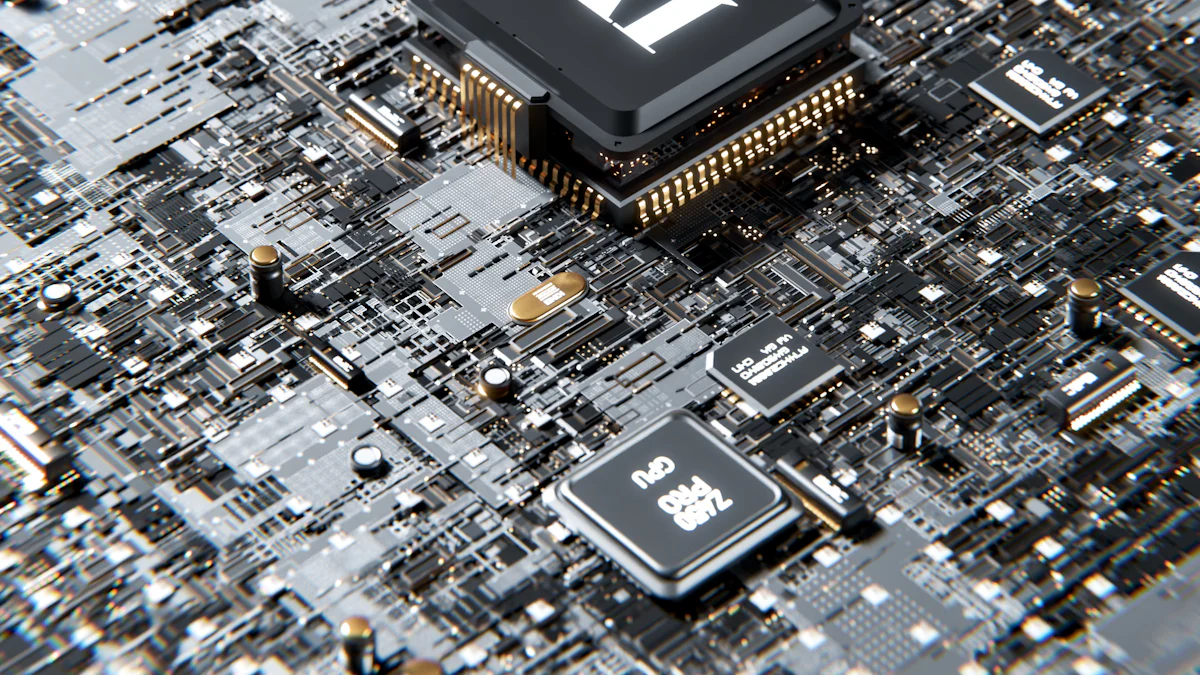
AI neural networks are revolutionizing industries by enhancing decision-making and problem-solving capabilities. Recent advancements in artificial neural networks have led to deeper and more efficient systems, driving exponential growth in research and applications. Zhongkai High-tech Zone plays a pivotal role in this evolution by fostering innovation and supporting enterprises in adopting cutting-edge methods. This zone provides a robust platform for companies to explore and implement new technologies, ensuring they remain competitive in the rapidly evolving AI landscape.
Recent Advancements in AI Neural Networks

Breakthroughs in Neural Architecture
Evolution of Convolutional Neural Networks (CNNs)
Convolutional Neural Networks (CNNs) have transformed the landscape of image processing and computer vision. Inspired by the human brain's visual cortex, CNNs excel at identifying patterns within visual inputs. They consist of layers such as input, convolution, pooling, fully connected, and output. These layers work together to automatically learn hierarchical representations of visual features. CNNs have become instrumental in tasks like image classification, object detection, and facial recognition. Their ability to process grid-like data, such as images or videos, has made them a cornerstone of AI neural networks.
Advancements in Recurrent Neural Networks (RNNs)
Recurrent Neural Networks (RNNs) have made significant strides in handling sequential data. Unlike traditional neural networks, RNNs possess feedback connections that allow them to retain information about previous inputs. This capability makes them ideal for tasks involving sequences, such as language modeling, speech recognition, and machine translation. By processing data in a temporal sequence, RNNs can understand context and dependencies, enhancing their performance in various applications. The evolution of RNNs continues to push the boundaries of what neural networks can achieve.
Emerging Trends in AI Research
Integration of Quantum Computing
Quantum computing is emerging as a game-changer in the field of AI neural networks. By leveraging the principles of quantum mechanics, researchers aim to solve complex problems that are currently beyond the reach of classical computers. Quantum computing promises to accelerate the training of deep learning models, enabling faster and more efficient computations. This integration holds the potential to revolutionize AI research, opening new avenues for innovation and discovery.
Use of Generative Adversarial Networks (GANs)
Generative Adversarial Networks (GANs) represent a groundbreaking approach in AI research. GANs consist of two neural networks, a generator and a discriminator, that work in tandem to create realistic data samples. This method has gained popularity for its ability to generate high-quality images, videos, and even music. GANs have found applications in various fields, including art, entertainment, and healthcare. Their capacity to produce synthetic data with remarkable accuracy showcases the versatility and potential of neural networks in creative and practical domains.
New Methods Enhancing Neural Networks

Transfer Learning
Transfer learning has emerged as a powerful technique in the realm of neural networks. It allows models trained on one task to be repurposed for another related task. This approach significantly reduces the time and resources needed for training new models.
Benefits of Pre-trained Models
Pre-trained models offer several advantages. They provide a strong foundation by leveraging existing knowledge, which accelerates the learning process for new tasks. This method is particularly beneficial when data is scarce or when computational resources are limited. By using pre-trained models, developers can achieve high accuracy with less effort, making it a cost-effective solution in AI development.
Applications in Image and Speech Recognition
In image and speech recognition, transfer learning has proven invaluable. Pre-trained models, such as those developed for image classification, can be fine-tuned for specific tasks like facial recognition or object detection. Similarly, in speech recognition, models trained on large datasets can be adapted to understand different languages or dialects. This adaptability enhances the performance of AI systems across various applications.
Reinforcement Learning
Reinforcement learning stands out as a dynamic method in neural networks, focusing on learning from the consequences of actions. It involves an agent interacting with an environment, receiving feedback, and adjusting its actions to maximize rewards.
Role in Autonomous Systems
In autonomous systems, reinforcement learning plays a crucial role. It enables machines to make decisions in real-time, adapting to changing environments. For instance, self-driving cars use reinforcement learning to navigate roads safely, learning from each journey to improve future performance. This method ensures that autonomous systems become more efficient and reliable over time.
Success Stories in Gaming and Robotics
Reinforcement learning has achieved remarkable success in gaming and robotics. In gaming, AI agents have mastered complex games like Go and Dota 2, surpassing human capabilities. In robotics, reinforcement learning helps robots learn tasks such as grasping objects or navigating obstacles. These success stories highlight the potential of reinforcement learning to revolutionize various industries.
Unsupervised Learning
Unsupervised learning offers a unique approach by identifying patterns in data without labeled examples. It is essential for tasks where data labeling is impractical or impossible.
Importance in Data Clustering
Data clustering is a primary application of unsupervised learning. It groups similar data points, revealing hidden structures within datasets. This method is crucial in fields like market segmentation, where understanding customer groups can drive targeted marketing strategies. By clustering data, businesses gain insights that inform decision-making processes.
Use Cases in Anomaly Detection
Anomaly detection is another significant application of unsupervised learning. It identifies unusual patterns that may indicate fraud, network intrusions, or equipment failures. In industries like finance and cybersecurity, detecting anomalies early can prevent significant losses. Unsupervised learning provides a robust framework for monitoring and maintaining system integrity.
Challenges and Future Directions in Graph Neural Networks
Graph neural networks (GNNs) have emerged as a transformative force in the realm of artificial intelligence. They have quietly become the dark horse behind numerous groundbreaking achievements, establishing themselves as game-changers in state-of-the-art production-ready models. However, like any technology, GNNs face challenges that need addressing to unlock their full potential.
Overcoming Data Limitations
Data limitations pose a significant challenge for graph neural networks. The quality and quantity of data directly impact the performance of these models. To overcome these limitations, researchers and developers employ various strategies.
Strategies for Data Augmentation
Data augmentation serves as a crucial method to enhance the dataset available for training GNNs. By artificially expanding the dataset, developers can improve the model's ability to generalize from limited data. Techniques such as node feature perturbation, edge manipulation, and graph transformations help create diverse training samples. These methods ensure that GNNs learn robust representations, even when data is scarce.
Addressing Bias in AI Models
Bias in AI models, including graph neural networks, remains a pressing concern. Bias can lead to unfair or inaccurate predictions, affecting the reliability of AI systems. Researchers focus on developing techniques to identify and mitigate bias in GNNs. By incorporating fairness constraints and leveraging diverse datasets, they aim to create more equitable models. Addressing bias not only enhances the ethical use of AI but also improves the overall performance of neural networks.
Future Prospects
The future of graph neural networks holds immense promise, with several exciting prospects on the horizon.
Potential of Neuromorphic Computing
Neuromorphic computing represents a frontier in the evolution of neural networks. This approach mimics the human brain's architecture, enabling more efficient and energy-saving computations. By integrating neuromorphic principles with GNNs, researchers aim to achieve unprecedented levels of performance. This synergy could revolutionize applications in areas such as robotics, autonomous systems, and real-time data processing.
The Role of Zhongkai High tech Zone in Future Developments
Zhongkai High-tech Zone plays a pivotal role in shaping the future of graph neural networks. As a hub of innovation, it provides a supportive environment for enterprises to explore and implement cutting-edge technologies. The zone's resources and infrastructure empower companies to stay competitive in the rapidly evolving AI landscape. By fostering collaboration and offering access to advanced research facilities, Zhongkai High-tech Zone ensures that businesses can harness the full potential of GNNs and other AI neural networks.
The blog explored key advancements in neural networks, highlighting methods like transfer learning and reinforcement learning. These innovations drive AI's future, enhancing capabilities in fields such as health diagnostics and autonomous systems. Zhongkai High-tech Zone plays a crucial role in this evolution. It provides a supportive environment for enterprises to innovate and adopt cutting-edge technologies. By fostering collaboration and offering resources, the zone ensures businesses remain competitive in the AI landscape. As neural networks continue to evolve, they must align with ethical and responsible practices to support human progress.
See Also
Maximizing Opportunities in High-tech Zones for Success
Uncovering Cutting-edge Developments in Zhongkai High-tech Area
Investigating Zhongkai High-tech Zone as an Innovation Center
Zhongkai High-tech Zone: Driving Innovation and Economic Expansion
Innovative Advancements in Huizhou's Zhongkai High-tech Zone

Zhongkai High tech Zone National foreign trade transformation and Upgradi Base(Electronic Information)Cloud Platform.
Address: Zhongkai High-tech Zone,Huizhou City ,Guangdong,China
E-mail: huizhoueii@163.com 13510001271@163.com
Tel: +86-0752-3279220 Mobile: +86-13510001271
