Navigating the Complexities of AI-Quantum Integration

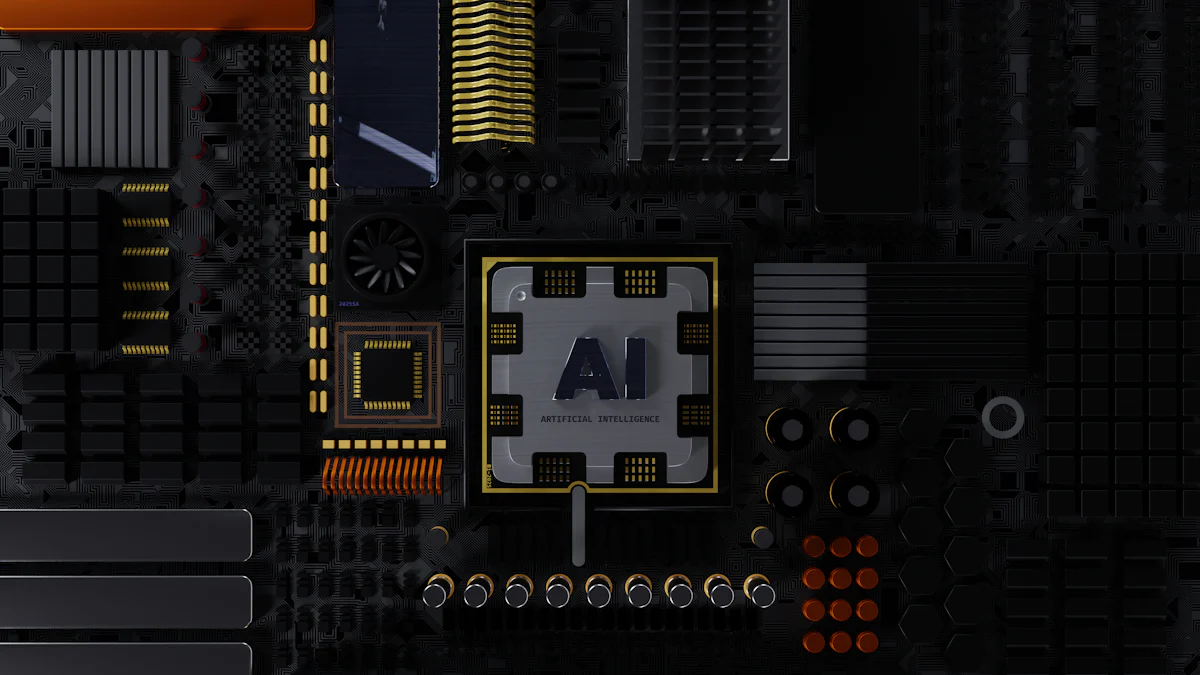
AI Quantum Computing represents a paradigm shift in computational approaches, promising to redefine technological capabilities. This integration offers unprecedented speed and efficiency, potentially transforming industries. The global quantum computing market is projected to grow significantly, reaching $6.5 billion by 2030. This growth highlights the immense potential of AI Quantum Computing. However, practical integration poses core questions about its benefits, challenges, and future implications. As industries explore this frontier, understanding these complexities becomes crucial for harnessing its full potential.
Understanding Quantum Computing
Quantum computing stands at the forefront of technological innovation, offering a new paradigm in computational power. This section delves into the fundamental principles and current state of quantum computing, providing insights into its potential and challenges.
Principles of Quantum Computing
Quantum computing operates on principles that differ significantly from classical computing. At its core, it leverages the unique properties of quantum mechanics to perform complex calculations.
Qubits and Quantum Superposition
Qubits, or quantum bits, form the basic unit of quantum information. Unlike classical bits, which exist in a state of 0 or 1, qubits can exist in multiple states simultaneously due to a phenomenon known as quantum superposition. This ability allows quantum computers to process a vast amount of information at once, exponentially increasing their computational power. Superposition enables quantum objects to exist in multiple states, providing unprecedented computational advantages.
Quantum Entanglement and its Implications
Quantum entanglement represents another cornerstone of quantum computing. When qubits become entangled, the state of one qubit instantly influences the state of another, regardless of the distance separating them. This property allows for faster information processing and communication, as entangled qubits can work in unison to solve complex problems. Entanglement, combined with superposition, empowers quantum computers to perform calculations exponentially faster than classical computers.
Current State of Quantum Computing
The field of quantum computing has witnessed significant advancements, yet it still faces numerous challenges.
Technological Advancements
Recent years have seen remarkable progress in quantum computing technology. Companies like IBM and Google have made strides in developing quantum processors capable of performing tasks beyond the reach of classical computers. These advancements have paved the way for AI Quantum Computing, where the integration of artificial intelligence with quantum computing promises to revolutionize industries by enhancing speed, efficiency, and accuracy.
Limitations and Challenges
Despite these advancements, quantum computing remains in its nascent stages. Several challenges hinder its widespread adoption. Scalability poses a significant hurdle, as building large-scale quantum computers requires overcoming technical barriers related to qubit stability and error correction. Additionally, integrating quantum systems with existing classical infrastructure presents another layer of complexity. Addressing these challenges is crucial for realizing the full potential of quantum computing.
AI's Current Capabilities and Limitations
Artificial Intelligence (AI) has become a cornerstone of modern technology, driving innovations across various sectors. This section explores the current capabilities and limitations of AI, providing insights into its role in data processing and analysis.
Overview of AI Technologies
AI technologies have evolved significantly, offering powerful tools for data-driven decision-making and automation.
Machine Learning and Deep Learning
Machine learning and deep learning represent two pivotal branches of AI. Machine learning enables systems to learn from data, improving their performance over time without explicit programming. Deep learning, a subset of machine learning, utilizes neural networks with multiple layers to analyze complex patterns in large datasets. These technologies have revolutionized fields such as image recognition, natural language processing, and autonomous vehicles.
AI in Data Processing and Analysis
AI excels in data processing and analysis, transforming raw data into actionable insights. It automates repetitive tasks, enhances decision-making, and uncovers hidden patterns within vast datasets. Industries like finance, healthcare, and marketing leverage AI to optimize operations and improve customer experiences. The ability to process and analyze data efficiently positions AI as a critical tool for businesses seeking a competitive edge.
Limitations of Current AI Systems limitations of AI
Despite its advancements, AI faces several limitations that hinder its full potential.
Computational Constraints
AI systems often encounter computational constraints, especially when dealing with large-scale data and complex models. Traditional computing resources may struggle to meet the demands of advanced AI algorithms, leading to slower processing times and increased energy consumption. Quantum computing, with its exponential computational power, offers a promising solution to these challenges by potentially speeding up AI algorithms and enabling the processing of larger datasets more efficiently.
Data Dependency and Bias
AI systems heavily rely on data for training and decision-making. This dependency can introduce biases if the training data is not representative or contains inherent prejudices. Biased AI models can lead to unfair outcomes and perpetuate existing inequalities. Addressing data dependency and bias requires careful data curation, diverse datasets, and robust validation processes to ensure AI systems operate fairly and ethically.
The integration of AI with quantum computing, known as AI Quantum Computing, represents a convergence of two cutting-edge technological domains. This integration aims to leverage the vast computational power of quantum mechanics to enhance AI capabilities, opening new avenues for machine learning and data analysis. As AI continues to evolve, understanding its current capabilities and limitations becomes crucial for harnessing its full potential.
Synergies Between AI and Quantum Computing

The integration of AI and quantum computing represents a groundbreaking convergence in technology. This synergy promises to unlock new possibilities in computational power and efficiency, paving the way for significant advancements across various fields.
Potential Breakthroughs
Enhanced Machine Learning Algorithms
AI Quantum Computing holds the potential to revolutionize machine learning algorithms. By leveraging the unique properties of quantum mechanics, such as superposition and entanglement, quantum computers can process vast amounts of data simultaneously. This capability allows AI systems to learn and adapt at an unprecedented pace, leading to more accurate predictions and insights. Various experts in the field highlight that quantum-inspired algorithms could enhance predictions and decision-making, offering transformative solutions in areas like natural language processing and computer vision.
Quantum-Accelerated Data Processing
Quantum computing's ability to perform complex calculations at remarkable speeds offers a significant advantage in data processing. AI systems, when integrated with quantum computing, can handle computationally-intensive tasks that are beyond the reach of classical computers. This quantum-AI synergy could lead to breakthroughs in fields such as medicine, materials science, and financial modeling. Recent studies demonstrate how quantum algorithms can significantly speed up data processing, improving the accuracy and efficiency of AI models.
Applications of AI-Quantum Integration
Drug Discovery and Material Science
The intersection of AI and quantum computing opens new avenues in drug discovery and material science. Quantum simulations can accelerate the analysis and optimization of molecular structures, potentially leading to faster drug development and innovative materials. Experts emphasize that quantum optimization techniques can significantly enhance healthcare research, offering promising solutions for complex biological challenges.
Cryptography and Cybersecurity
AI Quantum Computing also holds promise in the realm of cryptography and cybersecurity. Quantum computers can process high-dimensional data, enabling more robust encryption methods and secure communication protocols. This capability is crucial for protecting sensitive information in an increasingly digital world. The integration of AI with quantum computing could revolutionize cybersecurity strategies, providing advanced tools to safeguard against emerging threats.
The synergies between AI and quantum computing extend beyond incremental improvements, pointing toward potential breakthroughs in problem-solving. As industries explore this frontier, understanding these synergies becomes essential for harnessing the full potential of AI Quantum Computing.
Challenges and Limitations of AI-Quantum Integration
Technical Hurdles
Scalability and Error Correction
AI-Quantum integration faces significant technical challenges. Scalability remains a major hurdle. Quantum computers require stable qubits to function effectively, but maintaining stability becomes increasingly difficult as systems grow. Error correction presents another challenge. Quantum systems are prone to errors due to environmental interference. Researchers must develop robust error correction techniques to ensure reliable computations. These technical hurdles demand innovative solutions to unlock the full potential of AI-Quantum integration.
Integration with Existing Systems
Integrating quantum computing with existing classical systems poses additional challenges. Current infrastructure relies heavily on classical computing architectures. Transitioning to quantum systems requires significant modifications. Compatibility issues arise when attempting to merge these two distinct technologies. Developers must create seamless interfaces to facilitate communication between classical and quantum systems. Overcoming these integration challenges is crucial for the successful deployment of AI-Quantum technologies.
Ethical Considerations
Data Privacy and Security
The fusion of AI and quantum computing introduces ethical considerations that demand careful examination. Data privacy and security become pressing concerns as quantum-enhanced AI grows in computational power. Quantum computers can process vast amounts of data, raising questions about how this data is stored and protected. Ensuring data privacy requires robust encryption methods and secure communication protocols. Developers must prioritize ethical principles to safeguard sensitive information in an increasingly digital world.
Societal Impacts and Job Displacement
AI-Quantum integration also raises concerns about societal impacts and job displacement. The automation potential of AI-Quantum technologies could lead to significant changes in the workforce. While these technologies offer efficiency and innovation, they may also displace certain jobs. Society must address these potential impacts by developing frameworks and guidelines to ensure a fair transition. Ethical AI emphasizes the importance of fairness and accountability in the development of quantum algorithms, aiming to prevent existing biases and inequalities from being perpetuated.
"The integration of quantum computing and artificial intelligence has the potential to revolutionize decision-making processes, but it also raises significant ethical concerns."
Addressing these ethical concerns requires collaboration between technologists, policymakers, and ethicists. By developing ethical frameworks, society can harness the transformative power of AI-Quantum integration while minimizing potential risks.
Future Outlook on AI-Quantum Integration

Ongoing Research and Developments
The landscape of AI Quantum Computing continues to evolve with rapid advancements. Key players in the industry, such as IBM and Google, lead the charge in developing cutting-edge quantum technologies. These companies invest heavily in research to push the boundaries of what is possible with AI and quantum integration. Their innovations pave the way for new applications and solutions that were once thought unattainable.
Key Players and Innovations
IBM and Google stand at the forefront of AI Quantum Computing. They develop quantum processors capable of performing complex tasks with unprecedented speed and accuracy. These innovations enable breakthroughs in fields like machine learning and data analysis. The Zhongkai High-tech Zone National Foreign Trade Transformation and Upgrading Base (Electronic Information) Cloud Platform supports enterprises in this zone by providing access to these advanced technologies. This support helps businesses stay competitive in a rapidly changing technological landscape.
Collaborative Efforts in the Industry
Collaboration plays a crucial role in advancing AI Quantum Computing. Companies, research institutions, and governments work together to overcome technical challenges and drive innovation. The Zhongkai High-tech Zone fosters such collaborations by connecting enterprises with research partners and providing resources for joint projects. This collaborative environment accelerates the development of new technologies and ensures that businesses in the zone remain at the cutting edge of AI and quantum integration.
Potential Industry Impacts
The integration of AI and quantum computing promises to revolutionize various industries. This convergence enables new forms of human-machine interaction and reshapes sectors in profound ways.
Transformations in Technology Sectors
AI Quantum Computing transforms technology sectors by enhancing decision-making processes and optimizing operations. Industries like healthcare, finance, and logistics benefit from the increased computational power and efficiency offered by quantum technologies. The Zhongkai High-tech Zone supports these transformations by providing enterprises with the tools and resources needed to implement AI Quantum Computing solutions. This support helps businesses improve their competitiveness and adapt to changing market demands.
Long-term Implications for Society
The long-term implications of AI Quantum Computing extend beyond individual industries. This technology has the potential to reshape society by enabling new forms of communication, transportation, and energy management. As AI and quantum technologies continue to evolve, they will play a critical role in addressing global challenges such as climate change and resource scarcity. The Zhongkai High-tech Zone plays a vital role in supporting enterprises as they navigate these changes, ensuring that they can harness the full potential of AI Quantum Computing for the benefit of society.
AI Quantum Computing holds transformative potential, promising to revolutionize decision-making processes across various industries. This integration could tackle computationally-intensive tasks beyond classical computers' reach, powering breakthroughs in medicine, materials science, and cryptography. As AI and quantum computing converge, they offer new avenues for machine learning and data analysis, enhancing AI capabilities. The Zhongkai High-tech Zone National Foreign Trade Transformation and Upgrading Base (Electronic Information) Cloud Platform plays a crucial role in supporting enterprises, ensuring they harness this technological convergence effectively. Ongoing research and collaboration will continue to unlock the promise of AI Quantum Computing.
See Also
Leading Figures Shaping the Global Intelligent Control Sector
Assessing iFlight's Influence Within the High-Tech Area
Introducing Huizhou Zhongkai's New Electronic Cloud Platform
Discovering Zhongkai: Unexpected Advantages for Mobile Manufacturing
Investigating Zhongkai High-Tech Zone: A Center for Innovation

Zhongkai High tech Zone National foreign trade transformation and Upgradi Base(Electronic Information)Cloud Platform.
Address: Zhongkai High-tech Zone,Huizhou City ,Guangdong,China
E-mail: huizhoueii@163.com 13510001271@163.com
Tel: +86-0752-3279220 Mobile: +86-13510001271
