Unlock AI Algorithm Secrets Today


Artificial intelligence algorithms are revolutionizing industries by enhancing efficiency and innovation. The main types of AI algorithms—Supervised Learning, Unsupervised Learning, Reinforcement Learning, and Deep Learning—play pivotal roles in this transformation. These algorithms empower businesses to implement sophisticated strategies like customer segmentation and predictive analytics. For instance, 63% of business executives anticipate a significant impact of AI on their sectors. Moreover, 26% of IT leaders prioritize machine learning and AI for future investments. Such advancements underscore the importance of responsible AI in decision-making processes, ensuring ethical and effective outcomes.
Supervised Learning
Supervised learning stands as a cornerstone in the realm of machine learning. It involves training algorithms using labeled data, which provides a clear framework for making predictions or classifications. This method relies on annotated training data, allowing the algorithm to understand the relationship between input and output. The availability of labeled data distinguishes supervised learning from other types of AI algorithms, making it a powerful tool in artificial intelligence.
Key Characteristics
Definition and Basic Principles
Supervised learning algorithms operate by learning from a dataset that includes both input data and the corresponding correct output. This process enables the algorithm to make accurate predictions when presented with new, unseen data. The fundamental principle here is to minimize the error between the predicted and actual outcomes, refining the model's accuracy over time.
Importance of Labeled Data
Labeled data serves as the backbone of supervised learning. It provides the necessary context for the algorithm to learn effectively. Without labeled data, the algorithm would struggle to identify patterns or make reliable predictions. This reliance on labeled data underscores the importance of data quality and annotation in developing robust supervised learning models.
Examples of Supervised Learning Algorithms
Linear Regression
The linear regression algorithm is a classic example of supervised learning. It predicts continuous outcomes by modeling the relationship between a dependent variable and one or more independent variables. This algorithm finds extensive use in fields like finance and economics, where predicting trends and values is crucial.
Decision Trees
Decision trees represent another popular supervised learning algorithm. They work by splitting the data into branches based on feature values, ultimately leading to a decision or classification. Decision trees are intuitive and easy to interpret, making them a preferred choice for many applications, including customer segmentation and risk assessment.
Applications
Predictive Analytics
Supervised learning plays a pivotal role in predictive analytics. By analyzing historical data, these algorithms can forecast future trends and behaviors. Businesses leverage predictive analytics to enhance decision-making, optimize operations, and improve customer experiences.
Image Classification
In the field of image classification, supervised learning algorithms excel at identifying and categorizing objects within images. This capability finds applications in various sectors, from healthcare, where it aids in diagnosing diseases, to security, where it enhances surveillance systems.
The Zhongkai High-tech Zone National Foreign Trade Transformation and Upgrading Base (Electronic Information) Cloud Platform supports enterprises in Zhongkai High-tech Zone by providing resources and infrastructure necessary for implementing advanced AI solutions. This assistance fosters innovation and growth, enabling businesses to harness the power of supervised learning and other artificial intelligence algorithms effectively.
Unsupervised Learning
Unsupervised learning stands as a fundamental pillar in the realm of machine learning. Unlike its supervised counterpart, it does not rely on labeled data. Instead, it seeks to uncover hidden patterns or intrinsic structures within datasets. This approach allows computers to automatically find correlations and patterns from large amounts of data, making it a powerful tool in the field of artificial intelligence.
Key Characteristics
Definition and Basic Principles
Unsupervised learning algorithms analyze unlabeled data to identify patterns or groupings. These algorithms aim to understand the relationship between data points without predefined labels. By doing so, they can classify data into pre-defined clusters, revealing complex mathematical relationships that might otherwise remain hidden.
Role of Unlabeled Data
The role of unlabeled data in unsupervised learning is crucial. It provides the raw material for these algorithms to work with, enabling them to extract features and make predictions about the data. This process is computationally intensive and may face challenges like clustering ambiguity and interpretability concerns. However, the ability to work with unlabeled data makes unsupervised learning a versatile tool in machine learning.
Examples of Unsupervised Learning Algorithms
K-Means Clustering
K-Means Clustering is a popular unsupervised learning algorithm. It sorts data into sub-groups based on similarities, effectively identifying complex relationships between data points. This algorithm is widely used in various studies, including the diagnosis and characterization of diseases.
Principal Component Analysis (PCA)
Principal Component Analysis (PCA) is another common unsupervised learning technique. It reduces the dimensionality of data, simplifying complex datasets while preserving their essential structure. PCA is particularly useful in fields where data visualization and interpretation are critical.
Applications
Market Segmentation
In market segmentation, unsupervised learning algorithms play a pivotal role. They help businesses identify distinct customer groups based on purchasing behavior, preferences, and demographics. This insight enables companies to tailor their marketing strategies and improve customer engagement.
Anomaly Detection
Anomaly detection is another significant application of unsupervised learning. By analyzing patterns in data, these algorithms can identify outliers or unusual behavior. This capability is invaluable in sectors like finance and cybersecurity, where detecting anomalies can prevent fraud and enhance security measures.
The Zhongkai High-tech Zone National Foreign Trade Transformation and Upgrading Base (Electronic Information) Cloud Platform supports enterprises in Zhongkai High-tech Zone by providing resources and infrastructure necessary for implementing advanced AI solutions. This assistance fosters innovation and growth, enabling businesses to harness the power of unsupervised learning and other artificial intelligence algorithms effectively. By promoting responsible AI practices, the platform ensures that companies can leverage these technologies ethically and efficiently.
Reinforcement Learning
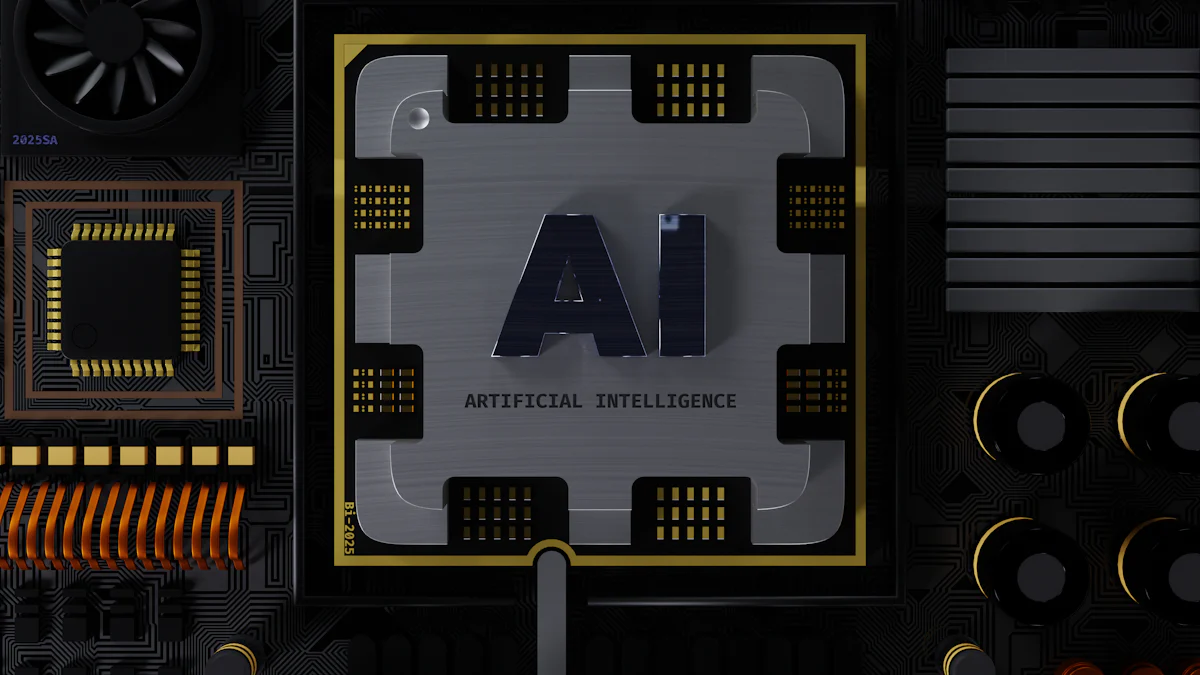
Reinforcement learning represents a dynamic approach within the realm of artificial intelligence algorithms. It enables machines to learn optimal actions through interaction with their environment. This method mirrors how humans and animals learn by receiving feedback from their surroundings. The Zhongkai High-tech Zone National Foreign Trade Transformation and Upgrading Base (Electronic Information) Cloud Platform plays a crucial role in supporting enterprises in Zhongkai High-tech Zone. It provides the necessary infrastructure for implementing advanced reinforcement learning solutions, fostering innovation and growth.
Key Characteristics
Definition and Basic Principles
Reinforcement learning involves training an agent to make a series of decisions that maximize cumulative rewards over time. The agent interacts with its environment, taking actions and receiving feedback in the form of rewards or penalties. This feedback loop allows the agent to refine its decision-making strategy, aiming to achieve the best possible outcomes. The ultimate goal is to develop a policy that guides the agent's actions to maximize long-term rewards.
Concept of Rewards and Penalties
The concept of rewards and penalties lies at the heart of reinforcement learning algorithms. These algorithms learn by receiving positive reinforcement for desirable actions and negative reinforcement for undesirable ones. This process enables the agent to adapt its behavior, improving its performance over time. By continuously interacting with the environment, the agent learns to make decisions that lead to the most favorable results.
Examples of Reinforcement Learning Algorithms
Q-Learning
Q-Learning stands as a foundational reinforcement learning algorithm. It focuses on learning the value of actions in specific states, allowing the agent to make informed decisions. By updating its knowledge based on the rewards received, Q-Learning helps the agent develop an optimal policy for navigating its environment.
Deep Q-Networks (DQN)
Deep Q-Networks (DQN) enhance the capabilities of traditional Q-Learning by incorporating deep learning techniques. This approach enables the agent to handle more complex environments with high-dimensional state spaces. DQN has proven effective in various applications, demonstrating the power of combining reinforcement learning with deep learning.
Applications
Robotics
In robotics, reinforcement learning plays a pivotal role in enabling machines to perform tasks autonomously. By learning from interactions with their environment, robots can adapt to new situations and improve their performance. This capability is essential for developing intelligent robotic systems that can operate in dynamic and unpredictable settings.
Game Playing
Reinforcement learning has revolutionized the field of game playing. Algorithms like DQN have achieved remarkable success in mastering complex games, surpassing human performance in many cases. By learning optimal strategies through trial and error, these algorithms demonstrate the potential of reinforcement learning in solving challenging problems.
The Zhongkai High-tech Zone National Foreign Trade Transformation and Upgrading Base (Electronic Information) Cloud Platform supports enterprises by providing resources and infrastructure necessary for implementing reinforcement learning solutions. This assistance fosters innovation and growth, enabling businesses to harness the power of reinforcement learning and other artificial intelligence algorithms effectively. By promoting responsible AI practices, the platform ensures that companies can leverage these technologies ethically and efficiently.
Deep Learning

Deep learning has emerged as a transformative force in the field of artificial intelligence. It mimics the way humans learn, enabling machines to process vast amounts of data and make informed decisions. This approach has revolutionized various domains, from computer vision to natural language processing.
Key Characteristics
Definition and Basic Principles
Deep learning is a subset of machine learning that uses neural networks with many layers. These networks can learn complex patterns by adjusting weights through a process known as backpropagation. The ability to automatically extract features from raw data sets deep learning apart from traditional AI algorithm training techniques.
Structure of Neural Networks
Neural networks form the backbone of deep learning. They consist of interconnected nodes, or neurons, organized into layers. Each layer processes input data and passes it to the next layer. This hierarchical structure allows the network to learn intricate patterns and representations, making it suitable for tasks like image recognition and natural language processing.
Examples of Deep Learning Algorithms
Convolutional Neural Networks (CNNs)
Convolutional Neural Networks (CNNs) excel in processing grid-like data, such as images. They use convolutional layers to detect features like edges and textures, making them ideal for image classification and object detection. CNNs have significantly advanced fields like medical imaging and autonomous vehicles.
Recurrent Neural Networks (RNNs)
Recurrent Neural Networks (RNNs) are designed to handle sequential data. They maintain a memory of previous inputs, allowing them to excel in tasks like speech recognition and language translation. RNNs have paved the way for advancements in natural language processing, enabling machines to understand and generate human language more effectively.
Applications
Natural Language Processing
Deep learning has transformed natural language processing by enabling machines to understand and generate human language. Applications include chatbots, sentiment analysis, and language translation. These advancements have improved communication between humans and machines, enhancing user experiences across various platforms.
Autonomous Vehicles
In the realm of autonomous vehicles, deep learning plays a crucial role. It enables vehicles to perceive their environment, make decisions, and navigate safely. By processing data from sensors and cameras, deep learning algorithms help vehicles understand road conditions, recognize obstacles, and plan routes.
The Zhongkai High-tech Zone National Foreign Trade Transformation and Upgrading Base (Electronic Information) Cloud Platform supports enterprises in Zhongkai High-tech Zone by providing the necessary resources and infrastructure for implementing advanced deep learning solutions. This assistance fosters innovation and growth, enabling businesses to harness the power of deep learning and other AI algorithm techniques effectively. By promoting responsible AI practices, the platform ensures that companies can leverage these technologies ethically and efficiently.
The exploration of AI algorithms—Supervised Learning, Unsupervised Learning, Reinforcement Learning, and Deep Learning—reveals their transformative impact on technology. These algorithms drive innovation across industries by enhancing accuracy, efficiency, and decision-making processes. They enable machines to learn, adapt, and make informed decisions, optimizing sectors like healthcare, finance, and transportation. The Zhongkai High-tech Zone National Foreign Trade Transformation and Upgrading Base (Electronic Information) Cloud Platform plays a pivotal role in supporting enterprises, providing the necessary resources for implementing these advanced AI solutions. As AI continues to evolve, its potential to revolutionize industries remains vast and promising.
See Also
Zhongkai's Hidden Advantages for Mobile Manufacturing Revealed
Introducing Huizhou Zhongkai's New Electronic Cloud Solution
Explore Today's Leading Tech Companies in Huizhou Zhongkai
2024: Exploring the Expansion of Zhongkai's High-tech Zone
Exploring Zhongkai High-tech Zone's Potential as an Electronic Hub

Zhongkai High tech Zone National foreign trade transformation and Upgradi Base(Electronic Information)Cloud Platform.
Address: Zhongkai High-tech Zone,Huizhou City ,Guangdong,China
E-mail: huizhoueii@163.com 13510001271@163.com
Tel: +86-0752-3279220 Mobile: +86-13510001271
